Most teams run into the same problem: they focus on the logo and the colors, place the order, and then discover three weeks before the first game that the sizing is off, the fabric pills under pads, or the numbers are screen-printed when the league requires tackle twill. Getting jerseys right means thinking through fabric, construction, sizing, customization method, and timeline before a single proof is approved. Miss one of those and the order becomes a scramble.
Fabric and Construction Matter More Than the Design
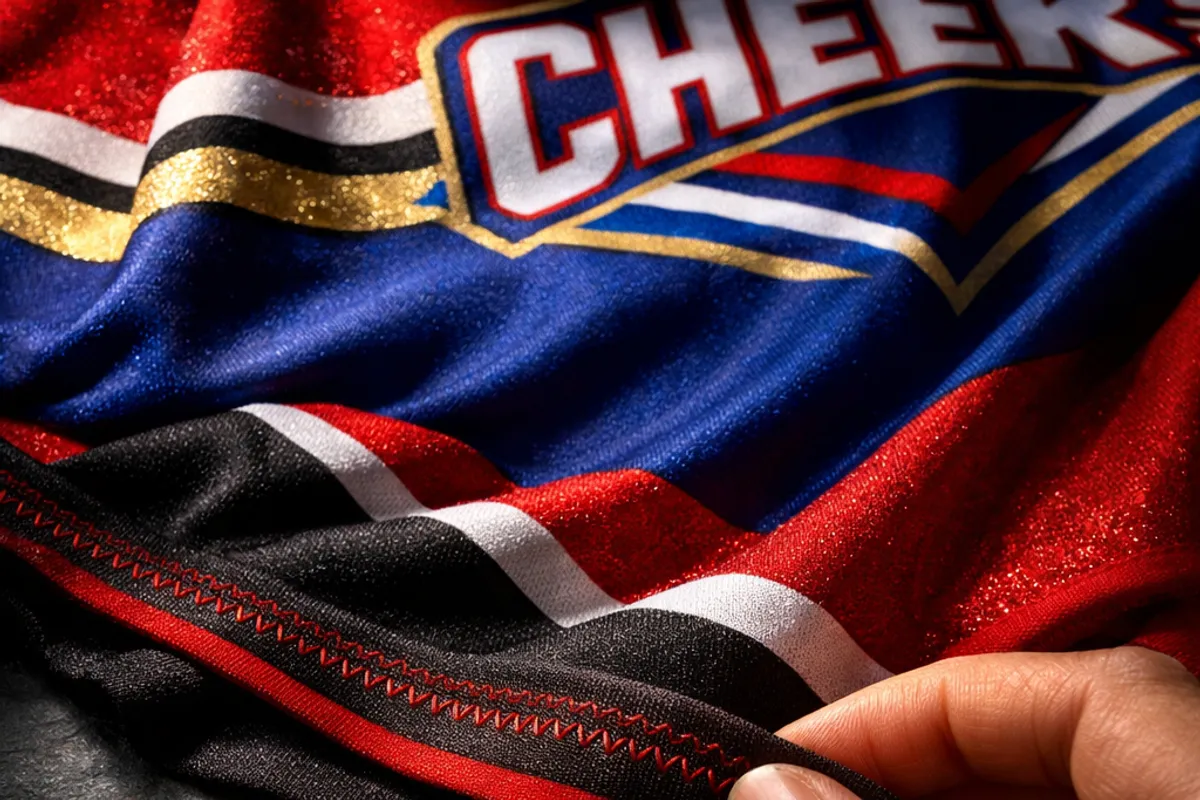
The jersey has to survive a full season of contact, washing, and hard use. That narrows the field fast. Polyester mesh remains the standard for game jerseys because it breathes, resists shrinkage, and holds color through repeated washing. Not all polyester is equal, though. A 100% polyester moisture-wicking mesh in the 4-ounce to 5-ounce range performs well for most levels of play. Heavier fabric reads as more durable but traps heat. Lighter fabric needs reinforced stitching at the collar and armholes or it tears at the seams mid-season.
Double-needle stitching on stress points is non-negotiable. Side panels, collar, and sleeve hems should all be reinforced. Slugger Athletics consistently advises teams to ask specifically about stitch count and seam construction before approving a sample, because two jerseys can look identical on a proof and perform completely differently on the field.
Sublimated jerseys have become the dominant option for teams that want complex graphics, gradients, or full-color logos without cracking or peeling. The dye is pressed into the fabric rather than sitting on top of it, so there is nothing to peel. The tradeoff is that sublimation only works on light-colored or white base fabric. Dark jerseys with sublimated graphics require a different approach, and some leagues have specific rules about how numbers must be applied.
Sizing Over Pads Is a Different Calculation
A player wearing shoulder pads, a chest protector, and rib guards is not the same size as that player in a t-shirt. Football jersey sizing has to account for all of that equipment underneath. Standard sizing charts from apparel manufacturers are built for bare torsos. A player who wears a size medium in a t-shirt may need a large or extra-large jersey to fit comfortably over full gear without restricting movement.
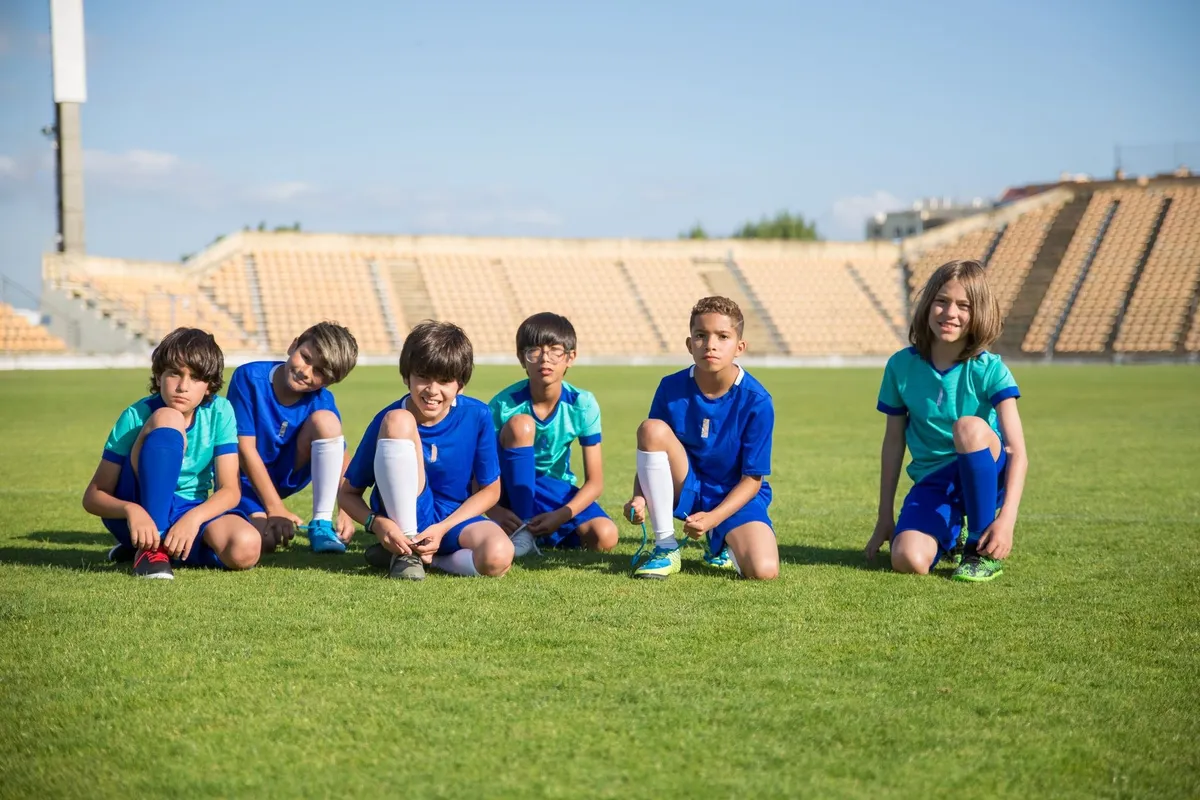
The safest approach is to measure players while they are wearing their pads. Chest circumference over pads, torso length from the collar to the hip, and shoulder width are the three measurements that matter most. Youth teams especially need to be careful here. Kids grow, pads vary by brand, and the margin for error is smaller. For a deeper breakdown of how sizing works specifically for younger players, this guide on youth football uniforms covers sizing over pads and league rules in detail.
Order a size run, not a single sample. If the team has 35 players, the order will include sizes ranging from youth medium through adult 3XL. Confirm with the supplier that every size in the run uses the same pattern grading, because some manufacturers scale sizes inconsistently and the XL ends up proportioned differently than the rest of the set.
Customization Methods and League Compliance
Numbers, names, and logos can be applied through sublimation, screen printing, heat transfer, or sewn tackle twill. Each method has different durability, cost, and compliance implications.
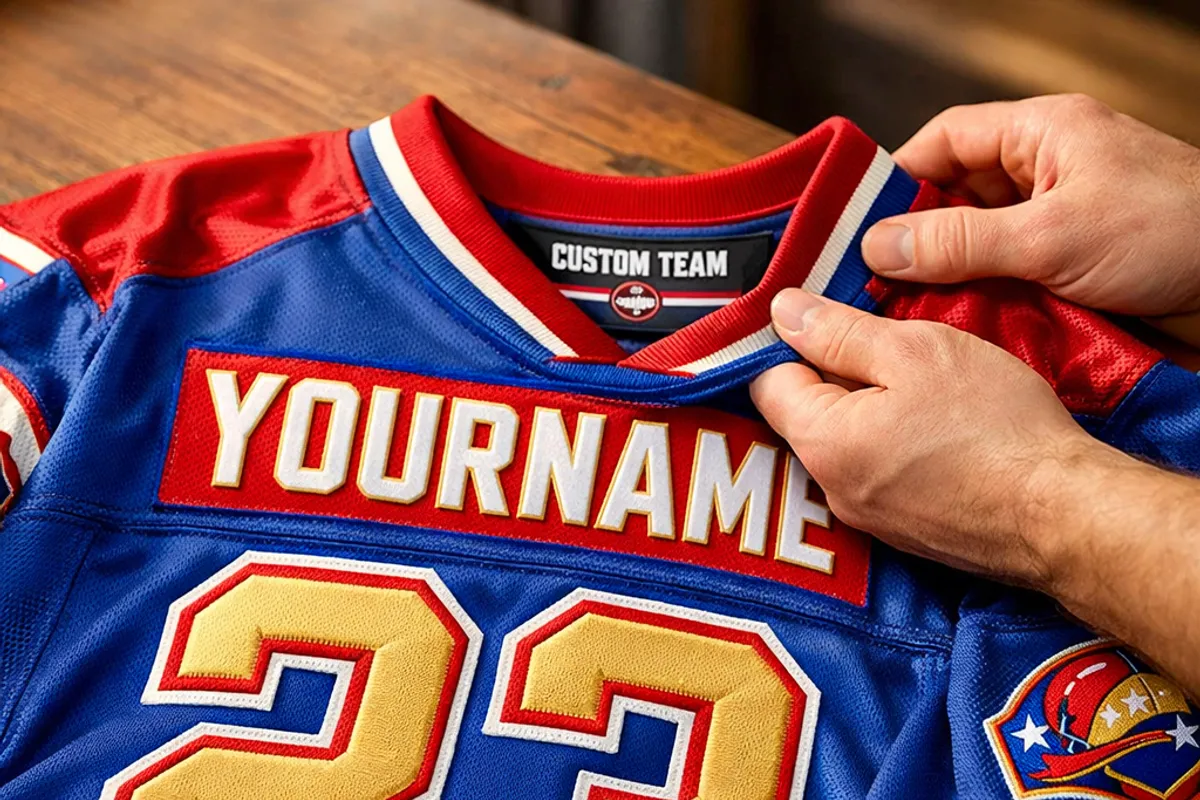
Tackle twill is the most durable option. Numbers are cut from twill fabric and sewn directly onto the jersey. It costs more and takes longer to produce, but it holds up for years and meets most high school and collegiate compliance standards. Screen printing is the least expensive but also the least durable. Heat transfer falls in the middle on both counts.
Check league rules before choosing a method. Some associations specify that numbers must be a minimum height, a specific color contrast from the jersey, or applied using a particular method. Getting this wrong means the jerseys may not pass inspection on game day. Slugger Athletics works with teams at multiple levels of play and flags these compliance details early in the process, which saves teams from having to reorder at full cost.
For a full breakdown of cuts, sizing, and pricing on sublimated options, the sublimated custom football jerseys page at Slugger Athletics lays out the specifics clearly.
Production Timeline and What Delays It
Standard production for a team jersey order runs four to six weeks from approved artwork to shipped product. Rush orders are possible but cost more and are not always available depending on the supplier’s current workload. Six weeks is a safe minimum. Eight weeks is comfortable. Anything under four weeks is a risk.
The most common delay is artwork. Teams submit low-resolution logos, request last-minute color changes after the proof is approved, or need multiple rounds of revisions on the number font. Every revision cycle adds time. Submit vector files in .ai or .eps format from the start. If the logo only exists as a JPEG from the team’s Facebook page, budget extra time and possibly extra cost for a redraw.
Player roster changes are the other delay. Teams add players, drop players, or change numbers after the order is placed. Establish a firm roster lock date before submitting the order and hold to it. Late additions almost always mean a second smaller order at a higher per-unit cost.
Slugger Athletics serves teams in Ocala, FL and the surrounding area, and operates as a trusted resource for custom team uniforms at every level of play. For questions about fabric, sizing, or compliance, the team can be reached at 603 E. Fort King St, Ocala, FL 34471, (352) 644-7927.
Frequently Asked Questions
What should I consider when deciding on the fabric for my team’s jerseys?
Polyester mesh is the standard choice because it breathes and resists shrinkage. Look for a 100% polyester moisture-wicking mesh in the 4-ounce to 5-ounce range for good performance, but ensure it has reinforced stitching at stress points to prevent tearing during play.
How do I ensure the sizing of the jerseys will fit players wearing pads?
Standard sizing charts don’t account for the additional bulk of shoulder pads and other gear. Measure players while they are wearing their pads to get accurate chest circumference, torso length, and shoulder width, and consider ordering a range of sizes to accommodate all players.
What are the different customization methods, and how do I choose the right one?
Customization methods include sublimation, screen printing, heat transfer, and sewn tackle twill, each with varying durability and cost. Tackle twill is the most durable but more expensive, while screen printing is the least durable; check league rules to ensure compliance with your chosen method.
What is the typical production timeline for jersey orders?
Standard production runs four to six weeks from approved artwork to shipment, with rush orders potentially costing more. Delays often arise from artwork issues or roster changes, so it’s crucial to submit high-resolution files and establish a firm roster lock date before placing the order.
Get Directions to Slugger Athletics
🎧 Listen to this as a podcast
Also on Apple Podcasts, Spotify, and Amazon Music.